It’s 2020 and we all must have heard of 5G for quite sometime now. But other than Gigabit speeds and low latency most of the audience is unaware of the core technology which stands as the backbone of this next-gen wireless network standard.
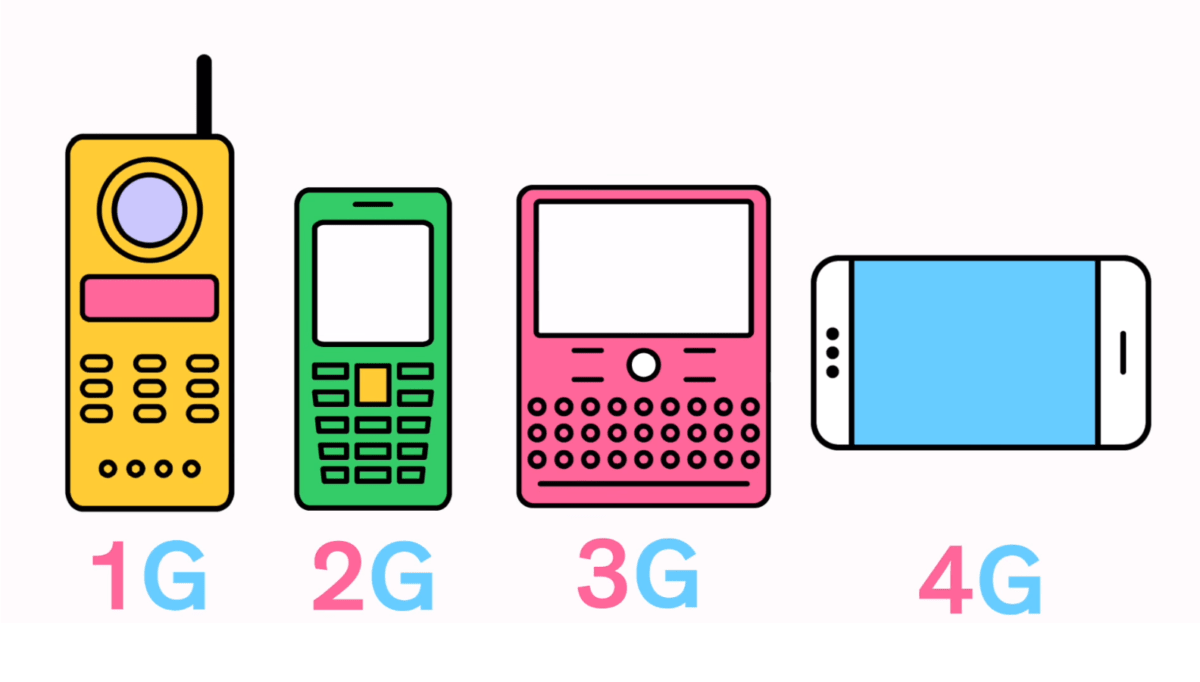
Every new generation of wireless networks delivers faster speeds and more funtionality:
1G brought us the first cell phones with calling funtionality
2G brought texting (SMS) above calling
3G was first time people started going online using smartphones along with android and apple’s iPhone started getting momentum.
4G brought high speed internet access that we all enjoy today.
But with the advent of cheaper electronics more devices getting connected to the network, 4G has reached it’s peak capacity. Now we want more data and higher throughput, thus it will be made possible with the next generation of network – 5G
The 5G network can theoretically handle 1000x more traffic than 4G and it will still be able to give us speeds of upto 1 Gbps (yes, gigabit speeds on phones)!!
The 5G technology will lay the foundation for Virtual Reality, Autonomous driving cars, Internet of things (IoT). But what exactly is 5G ??
Let me breakdown the network by explaining it’s 5 pillars to understand.

Let’s talk about all these one by one:
- Millimeter Waves:
Our smartphones and other devices uses radiowaves to communicate with network towers and their frequencies are below 6 Ghz but as said earlier, our network is getting more crowded thus we need to free up with increasing devices. The solution – open up unused frequency. Scientists have experimented using millimeter wave frequencies, those which lie between 30 to 300 Ghz, but there’s a problem – these waves are so weak that it cannot even cross a tree or a wall and to overcome this technology, we will go on to explain the next one, i.e small cell. - Small Cell:
Today’s networks rely on high power towers to broadcast signal. But with these millimeter waves which can travel only a small distance, we would be needing thousands of low power small cells (possibly at every light pole on streets). - Massive MIMO:
MIMO stands for Multiple input multiple output. 4G network supports a few antennas for transmitting information, but in case of Massive MIMO – we will be having hundreds of small antennas to lower the latency and increase the overall throughput. - Beamforming:
Beamforming can be understood as a traffic signal system for cellular signal. Instead of broadcasting information in all directions like in 4G, in case of beamforming we will send a focussed stream of data to a specific user. This will prevent interference which will be created due to hundreds of antennas required for MIMO and also be more efficient which in turn means that any tower can now handle more users and give better service to more users. This will be done with real time calculation of time delay data along with machine learning after the signals bounce of walls and other obstacles in order to reach the tower so that the tower can triangulate the location of phone. - Full Duplexing:
Now today’s networks can do one job at a time either transmit or receive due to which we cannot do both the jobs at the same time. With full duplexing, what we can do is that with the help of high frequency silicon transistors we can momentarily re-route both traffic such that they dont interfere each other.
What do you think by when will we be able to enjoy the full services of 5G as being a widely adopted technology worldwide?
 Madhuresh's Tech & Life Journal
Leave a comment